
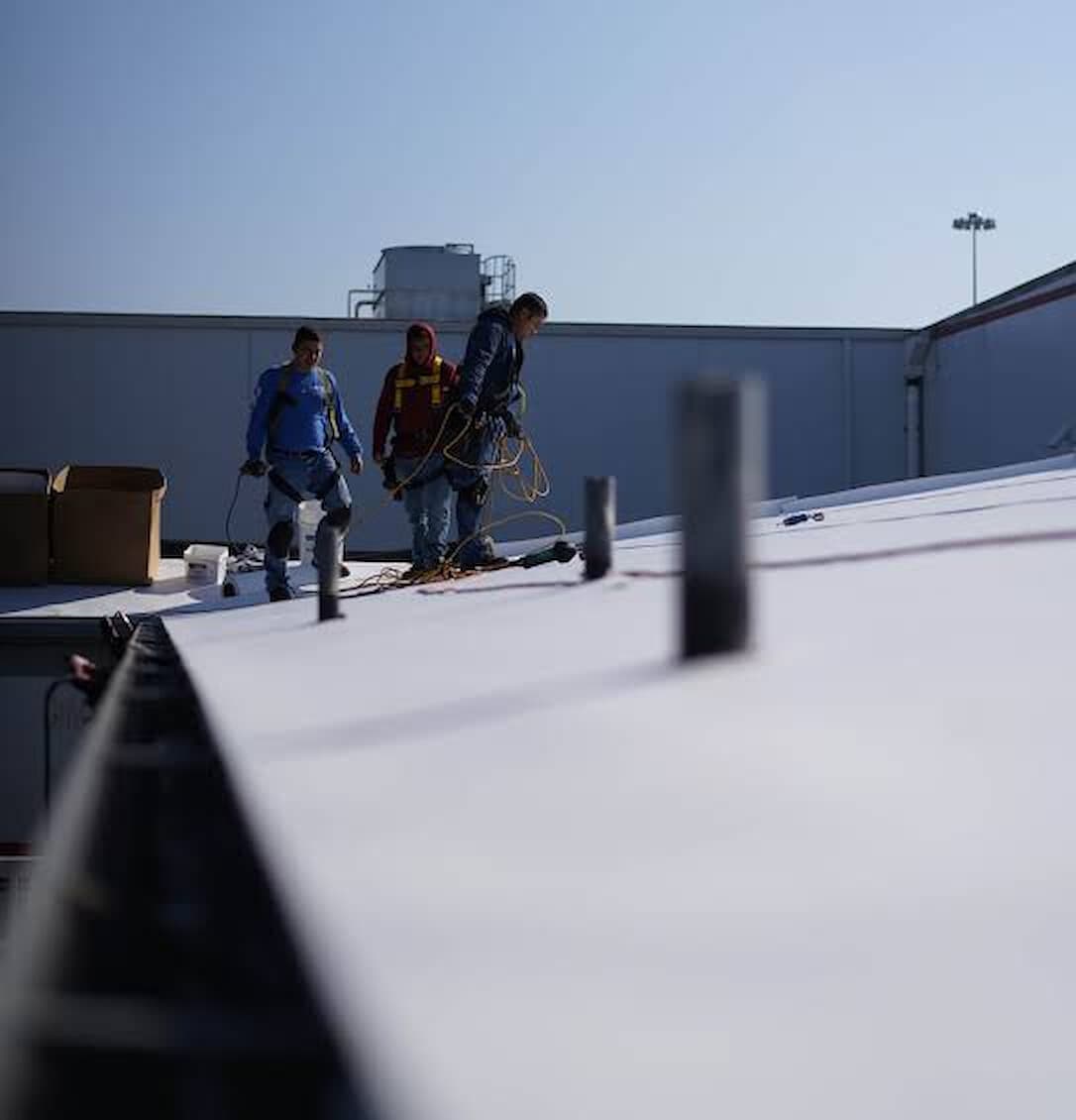
Commercial Roofing in Toledo, OH Commercial roofs, planned around your operation.
Installation, replacement, restoration and maintenance of flat and low-slope commercial roof systems.
Commercial Roofing
What we do
- 01
New commercial roofs
Membrane and foam systems specified to the building's slope, drainage, insulation needs and budget.
- 02
Replacement & overlay
Full tear-off where the existing roof is failing, or a recover over a sound substrate where it makes sense.
- 03
Restoration coatings
Coating programs that extend the service life of an aging but sound roof surface.
- 04
Maintenance & repairs
Seam, flashing and penetration repairs, plus scheduled inspections that catch problems early.
Roof systems
Choosing the right system
Each low-slope system has a job it does best. Here’s how they compare.
EPDM
A synthetic rubber membrane, fully adhered or mechanically fastened, with a long track record on low-slope roofs.
Best for: Garages, additions, and commercial roofs where proven durability matters most.
TPO
A heat-welded thermoplastic membrane with a bright, reflective surface that helps reduce solar heat gain.
Best for: Larger commercial roofs and buildings that benefit from a reflective surface.
Self-adhering systems
Modified-bitumen sheets with a factory adhesive backing — installed without open flame.
Best for: Occupied buildings and detail areas where torch work is not ideal.
Torch-down
Modified-bitumen membrane heat-fused in overlapping layers for a dense, multi-ply roof.
Best for: Low-slope roofs that see foot traffic or need a heavy, multi-ply membrane.
Spray polyurethane foam
Foam sprayed in place to form a seamless, insulating layer that can be shaped to improve drainage.
Best for: Irregular roofs, many penetrations, or buildings that need added insulation.
Roof coatings
Fluid-applied coatings that restore and protect a sound existing roof surface.
Best for: Extending the life of a roof that is aged but still structurally sound.
How it works
From first look to final walkthrough
- 1
Roof assessment
Condition review of membrane, seams, flashings, drainage and penetrations.
- 2
System recommendation
Options compared side-by-side: replacement, recover, or restoration — with the tradeoffs explained.
- 3
Scheduled installation
Work sequenced to keep your building operating and the site safe.
- 4
Closeout
Final inspection of the completed work with you or your facilities team.
Every project starts with a free look at the roof. What a free roof inspection covers
Roof estimator
Start with a ballpark price
No contact details needed to see your range.
- Step 1 of 3Project
- Step 2 of 3Roof details
- Step 3 of 3Your estimate
Tell us about the project
Helps us prepare for your inspection.
Questions
Good to know
Can my existing roof be coated instead of replaced?
Coatings work when the existing roof and insulation are dry and structurally sound. Saturated insulation or widespread membrane failure usually means replacement. An inspection determines which applies.
Which membrane is right for my building?
It depends on slope, foot traffic, rooftop equipment, reflectivity goals and budget. We explain EPDM, TPO, modified bitumen and spray foam options for your specific roof.